

Responsibilities of the Position
Over the past several decades, Wellesley College (the College,) has built a national profile in multifaith work through its office of religious and spiritual life (ORSL). Wellesley now seeks a visionary leader who possesses the skills and personal qualities to build on the program’s strong foundation, expand its multifaith mission, and further broaden and deepen students’ connections between intellectual life, religious and spiritual life, and wellness within their residential campus community and beyond. The next dean will build connections throughout Wellesley’s diverse campus community and must possess the character and charisma to be an influential voice among students, faculty, and staff.
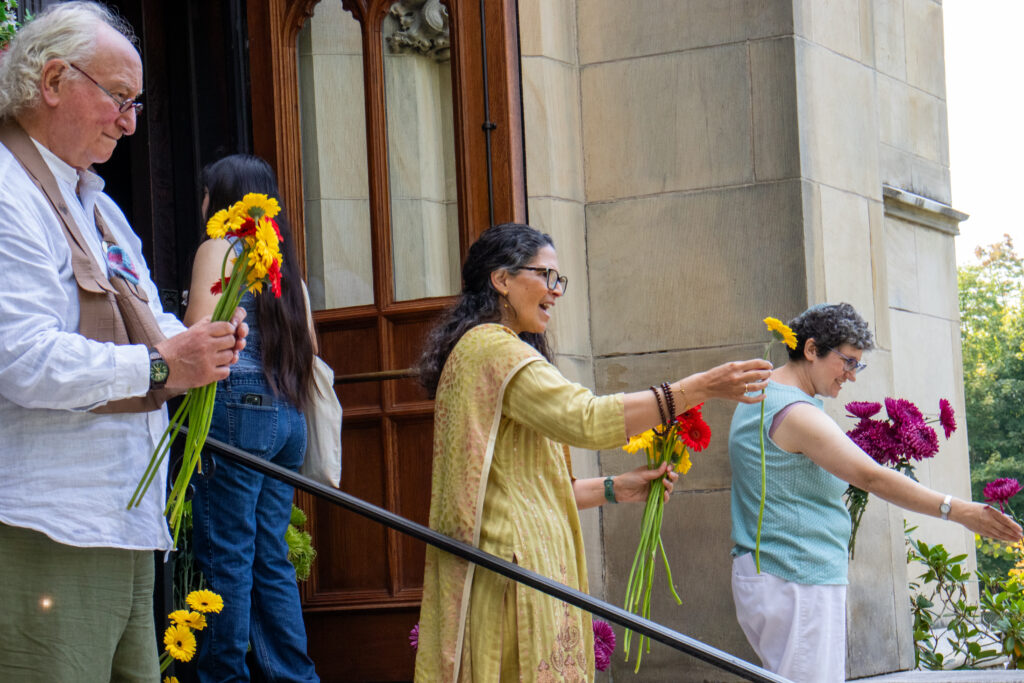
Reporting to the vice president and dean of students, Sheilah Shaw Horton, the dean of religious and spiritual life will continue Wellesley’s tradition of innovation in, and commitment to, religious and spiritual life in an increasingly diverse context. The dean will support and advise the College’s recognized religious student groups and will oversee major campus-wide traditional programs such as Flower Sunday and Baccalaureate.
The religious and spiritual life team comprises a staff of three full-time and two part-time College chaplains, who represent a variety of traditions including Buddhist, Hindu, Jewish, Muslim, Christian, and Unitarian Universalist. The dean will lead the religious and spiritual life team of chaplains as a collective, as well as supervise and mentor them individually. Together with the dean and office manager, the team fosters religious, spiritual, and ethical life at Wellesley. They offer opportunities for contemplative practice, meaning-making, spiritual seeking, and personal wellness, rooted in both religious and non-religious wisdom traditions, as well as multifaith collaboration. Through their collective work, the office exemplifies a new approach to working towards common goals while respecting and celebrating differences and diversity. The ORSL team partners with faculty, staff and students to offer a confidential space for all students to explore their concerns as they grow through the challenges of living and thriving in a diverse community.
Other Responsibilities of the Role:
- Oversee the administration of the office of religious and spiritual life, including the management of the Houghton Chapel and the Multifaith Center.
- Provide direct oversight of the office of religious and spiritual life, including supervising and mentoring staff members, budget oversight, and space management.
- Preside over some of the major community rituals at the College, including convocation, Commencement, and Reunion services and take responsibility for planning and implementing Flower Sunday, and baccalaureate.
- Demonstrate leadership as an impactful intellectual, moral, and ethical voice for the College.
- Offer counsel to faculty and staff in their own efforts to support students from all faith backgrounds in and out of the classroom.
- Provide support, counsel, and guidance to individuals and groups, and serve as a resource for family and extended members of the Wellesley community during times of grief.
- Foster greater understanding across lines of difference through education, programming, and opportunities for deeper engagement in co-curricular settings.
- Serve as the College’s liaison with off-campus religious communities and with organizations in higher education related to religious and spiritual life.
- Provide vision and identify opportunities to connect to the College’s commitments and ambitions around inclusive excellence and holistic student health and wellness.
- Engage and collaborate with faculty, staff, and students, and respond effectively to their needs and concerns.
- Communicate broadly across campus to cultivate and sustain critical partnerships and relationships.
- Build unity around difficult and complex issues through effective listening, facilitating, and mediating.
- Advance equity and inclusiveness through the goals and mission of ORSL.
- Support the campus and student life team through developed programs such as retreats, service trips, and residential programming designed to create opportunities for reflection and self-awareness.
- Serve as a member of the vice president and dean of students’ leadership team advising on divisional projects and approach to complex problems.
Qualifications and Characteristics of the Successful Candidate
An accredited M.Div. or equivalent academic credentials and training in religious leadership, ordination (when possible), and extensive experience, ideally in a college or university setting, are required. Highest academic credentials preferred.
The successful candidate must possess pastoral skills, theological depth, intellectual acumen, knowledge of student affairs, and have demonstrated leadership within a particular religious tradition. The dean must possess a broad understanding of the world’s spiritual traditions, be experienced in other cultures and religious traditions, and be able to apply that understanding in Wellesley’s diverse environment and tradition of educating women.
In addition to the qualifications stated above, key stakeholders identified the following capabilities and attributes of a successful candidate:
- Strong administrative and team management skills.
- Excellent public speaking and oratory skills.
- A deep understanding of the educational value of a diverse university community.
- Demonstrated track record of advancing equity and enhancing inclusiveness.
- Ability to lead with equanimity, discretion, and a sense of responsibility.
- An academic grounding in the study of religious and spiritual belief systems and an intellectual presence to most effectively partner with faculty, staff, and students across a university setting.

Opportunities and Challenges of the Role
In transitioning to Wellesley College, the dean of religious and spiritual life will encounter the following opportunities, priorities, and challenges, as shared by key campus stakeholders:
- Wellesley seeks a new dean to provide spiritual leadership and vision. The next dean must support all students at Wellesley, regardless of faith tradition, and must find ways to marry tradition with innovation.
- The next dean will lead a well-established and high-functioning team of chaplains whom the College employs. The dean must think systematically, deploy resources judiciously, and communicate effectively with this team, as well as with other student life leaders who support the mission of the College.
- As a visible leader on campus, the dean must preside with ebullience during times of celebration and compassion during times of transition or tragedy. The community looks to the new dean to facilitate the critical conversations that are necessary on campus and in the community.
- In partnership with the chaplains, the dean will work to foster greater understanding among members of different religious faiths and support those who do not practice a faith tradition but seek connection and engagement. In the context of current geopolitical influences, the dean must seek to identify, support, create, and solidify a path towards common ground, deepen appreciation for religious diversity, and increase cooperation between different religious communities within the College.
Measures of Success
The items listed below will define the dean of religious and spiritual life’s success throughout the first year of employment:
- The dean has taken every opportunity to partner across the division and throughout the College to increase visibility and find new ways to support students, as well as nurture the connection between spirituality and wellness.
- The campus has seen the new dean be a visible and active participant in important traditions, and they are viewed as providing a sense of warmth, kindness, and approachability throughout the College.
- The dean understands their role in translating the student experience to the College administration, while also understanding their own role as an administrator to support the institution.
- They have experienced success within the ORSL team by seeking to understand their experiences and bridging previous successes with new efficiencies to support students best.

Overview of Religious and Spiritual Life
Wellesley is a college with a storied history. It has played, and continues to play, a decisive role in shaping leadership models for women. Founded in 1870 by Pauline and Henry Durant to “offer to young women opportunities for education equivalent to those usually provided in colleges for young men,” it opened its doors in 1875. It was the first American college to have a president, faculty, and students who were all women. The College has also played a unique role in redefining the role of multifaith religious and spiritual life on college campuses. In 1993, the Wellesley College community introduced an exciting new model of religious and spiritual life that embraced multifaith religious access as a central tenet of a liberal arts education.
The office of religious and spiritual life at Wellesley strives to foster connections and community among all students, and to engage them in meaningful, multifaith and interfaith programs. By learning about and with people from diverse religious and cultural traditions, students build transformative relationships that can dispel the myths that often fuel forms of intolerance. Wellesley fosters religious communities and provides platforms for rich community connections and conversations. If students wish to seek counsel, they can meet with a chaplain for a confidential, nonjudgmental conversation about spirituality and life. The office also facilitates communication between students and professors to arrange accommodations during religious observance days.
The College chaplains serve students of all faith traditions and philosophical worldviews and have been assigned to student residence halls as “neighborhood chaplains” to create new ways to connect beyond a religious tradition.
About the Houghton Chapel and Multifaith Center
Since its dedication in 1899, the historic Houghton Chapel has served as a center of community life at Wellesley College. The chapel is as a critical venue for College ceremonies and traditions, as well as for concerts, lectures, and other performances. For nearly the entire history of Wellesley College, Houghton Chapel has afforded the community a spiritual space, which supports and complements the pursuit of intellectual excellence and personal growth. As indicated by the three keys given to each president of Wellesley College as she takes office (to the library, the dormitory, and the Chapel), the Chapel reflects the College’s commitment that the education of the whole person—intellectually, relationally, and spiritually—remains at the core of the mission of the institution.
In the spring of 2008, Houghton Chapel was renovated, including the restoration of the upper Chapel and the creation of the new Multifaith Center on the first level of the building. The Multifaith Center is a global center of learning and discovery for all people, a place where individuals can engage in prayer, meditation, study, worship, and education. By adding new sacred spaces to the existing facilities in the Chapel and Jewish Life Lounge (Billings Hall), the Center provides spaces for regular gathering for all of the College’s religious communities including Baha’i, Buddhist, Christian (Protestant, Roman Catholic, Orthodox, and Evangelical), Hindu, Humanist, Jain, Jewish, Muslim, Native African, Native American, Quaker, Sikh, and Unitarian Universalist groups.
Overview of the Division of Student Life
Led by the vice president and dean of students, the division of student life includes the office of the dean of students, residential life, student involvement, academic advising, accessibility and disability resources, inclusion and engagement, the office of religious and spiritual life, international students, student success, LGBTQ services, health and counseling, student wellness and public safety.
Divisional Leadership

Sheilah Shaw Horton
A seasoned administrator with over 30 years of experience, Dr. Sheilah Shaw Horton has been the vice president and dean of students at Wellesley College since July 2017. At Wellesley, Horton serves on the senior leadership team and oversees a division of ten different departments, spanning the areas of residential life and housing, counseling, health, wellness, public safety, academic advising, intercultural education, services for students with disabilities, and other student support areas. Prior to Wellesley, Horton was vice president of student affairs at Loyola University of Maryland and at Boston College, where she served in several roles, including associate vice president of student affairs and dean of students. Horton knows student life from many vantage points, having taught undergraduate and graduate students and serves as a trustee of her alma mater, Emmanuel College. She holds a master’s degree and a PhD in counseling psychology from Boston College.
Institutional Overview
Wellesley College is known for the excellence of its education, its gifted faculty, the beauty of its setting, and the uniqueness of its campus culture. But most of all, Wellesley is known as the preeminent women’s college in the United States and for the thousands of accomplished, thoughtful graduates it has sent into the world since 1870. As a private, highly selective, non-profit liberal arts college for women and member of the Seven Sisters Colleges, Wellesley has a lively academic community that places a high value on rigorous, probing inquiry and creative, cross-discipline thinking.
Wellesley College has a rich tradition of excellence in all aspects of the student journey, and on-campus living is a fundamental pillar of student experience. With 98 percent of students living on-campus in a unique learning environment, it is easy to understand why, at Wellesley, the student voice is valued in decision-making; students serve on major board of trustees’ committees, participate in faculty search processes, and contribute to campus strategic planning.
Located just outside Boston, Massachusetts, the breathtaking natural environment in which the campus is thoughtfully sited distinguishes Wellesley’s physical setting in the classic New England town of Wellesley, Massachusetts.
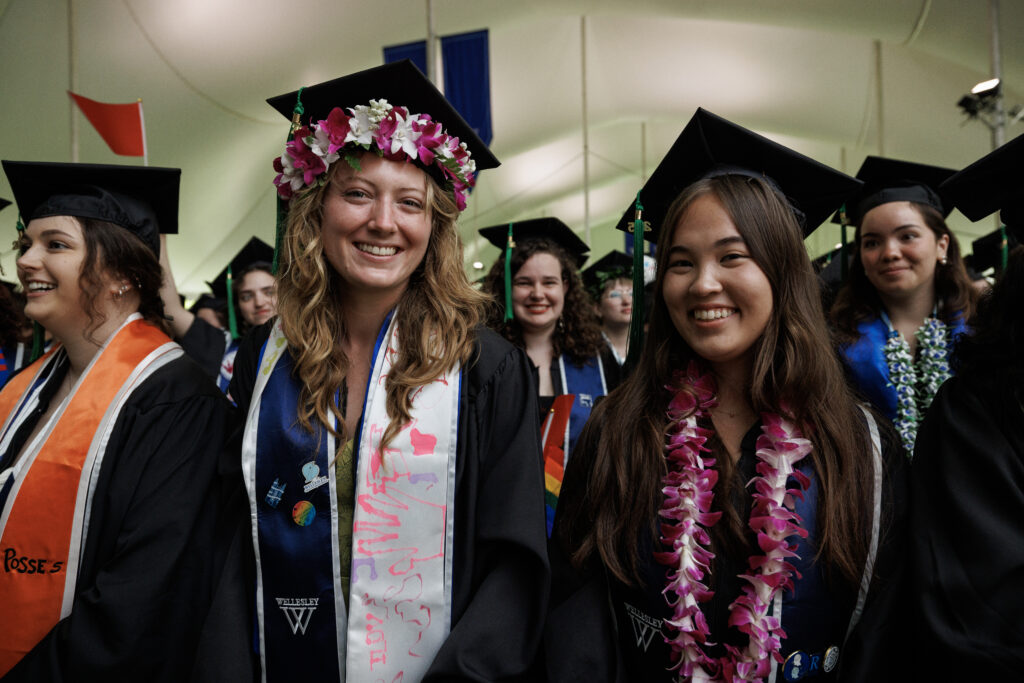
The Student Body
Total Enrollment: 2,107
African American/Black: 8.3%
Asian: 25.2%
Hispanic/Latino: 13.8%
White: 29.7%
Two or More Races: 7.7%
Unknown: 1.9%
Non-Resident: 13.1%
Institutional Leadership

Paula Johnson
Paula A. Johnson is a pioneer with decades of experience in academic medicine, public health, and higher education. Since joining Wellesley in 2016, Johnson has placed the College at the forefront of STEM education for women and has led the creation of the school’s new strategic plan, which places inclusive excellence at the heart of the Wellesley experience. President Johnson has held several leadership roles in her career as a physician-scientist. She most recently served as the Grayce A. Young Family Professor of Medicine in Women’s Health at Harvard Medical School and as a professor of epidemiology at the Harvard T.H. Chan School of Health. In addition, she founded the Connors Center for Women’s Health and Gender Biology at Brigham and Women’s Hospital.
Johnson is a member of the National Academy of Medicine and the American Academy of Arts and Sciences. She has received several honorary degrees and numerous awards for her contributions to science, medicine, and public health.
Born and raised in Brooklyn, New York, Johnson attended Harvard University, earning her bachelor’s, master’s, and doctoral degrees. She also trained in internal medicine and cardiovascular medicine at Brigham and Women’s Hospital, one of the leading Harvard teaching hospitals. Johnson has served on several national and international boards, and she currently serves on the board of directors for Rockefeller University, the Isabella Stewart Gardner Museum in Boston, and Johnson & Johnson.
To learn more about Wellesley’s senior leadership, click here.
Benefits Overview
Wellesley College offers a wide variety of benefit programs and resources to its employees. For more information, click here.
Application
Review of applications will begin immediately and continue until the position is filled. To apply for this position please click on the Apply button, complete the brief application process, and upload your resume and position-specific cover letter. Applicants needing reasonable accommodation to participate in the application process should contact Spelman Johnson at 413-529-2895 or email info@spelmanjohnson.com.
Visit the Wellesley College website at https://www.wellesley.edu/
At Wellesley, we embrace and honor difference and diversity. We believe the best ideas—the best solutions—draw on a range of voices, perspectives, and experiences. As a college, and as a community, we are dedicated to assuring that all members of the Wellesley community have an equal opportunity to flourish.
Wellesley College is an Equal Opportunity Employer and prohibits discrimination against qualified individuals in hiring and advancement based on any legally protected status. Candidates who believe they can contribute to the College community are encouraged to apply.
It is unlawful in Massachusetts to require or administer a lie detector test as a condition of employment or continued employment. An employer who violates this law shall be subject to criminal penalties and civil liability.
RELATED LINKS: