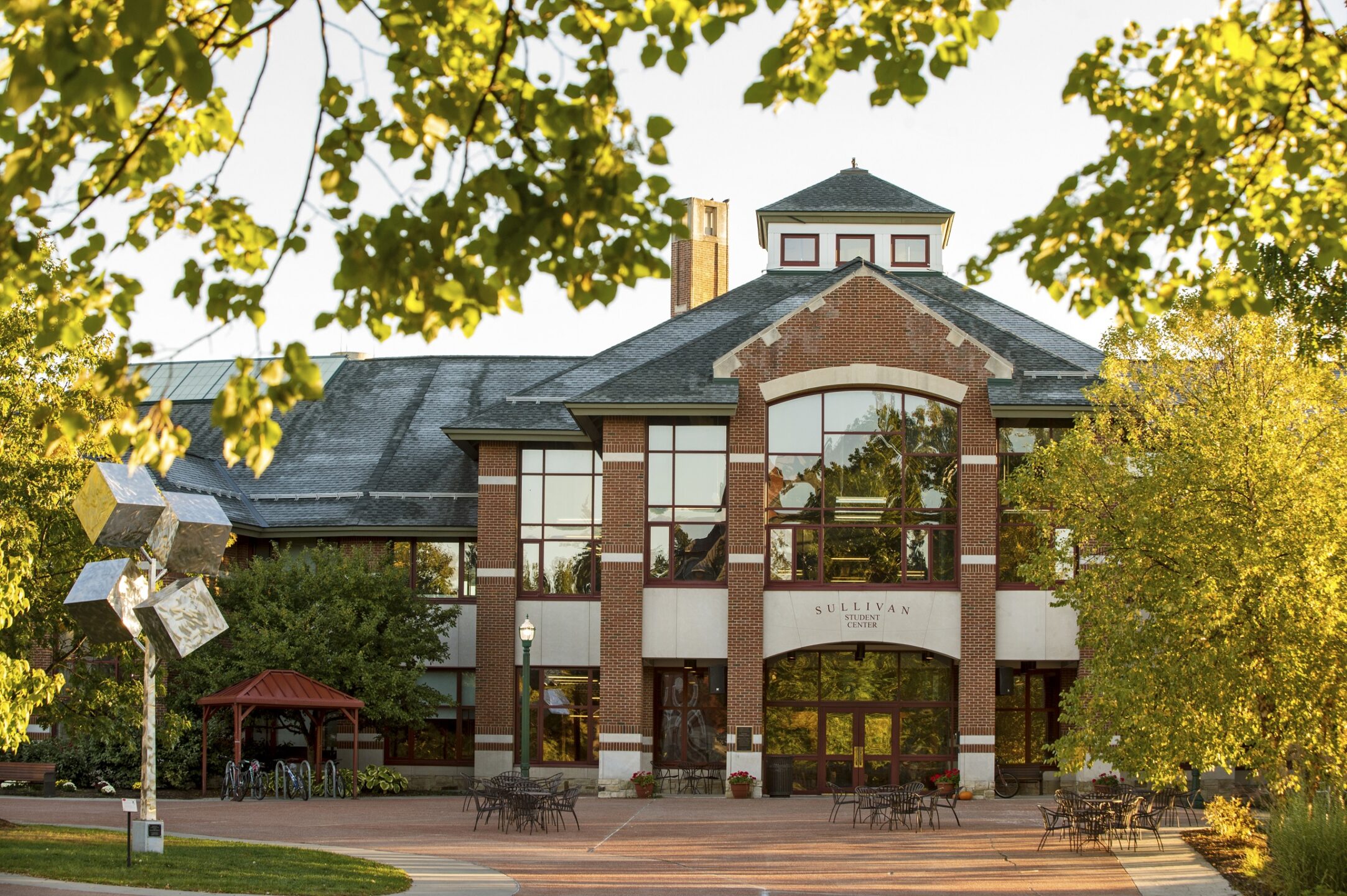

St. Lawrence University (St. Lawrence) seeks applications, nominations, and referrals for a collaborative, strategic, and community-oriented public safety leader to serve as its next director of safety, security, and emergency management. This position is an on-site role; the anticipated start date is summer 2026.
Responsibilities of the Position
St. Lawrence University’s director of safety, security, and emergency management (director) is responsible for fostering a safe, inclusive, and welcoming campus environment through proactive safety programs, emergency preparedness, and strong community partnerships. The director facilitates and oversees the integration of the University Safety and Security Department’s (campus safety) services into the broader campus community, actively promoting positive relations with the entire local community.
Reporting to the vice president for finance and administration—with an informal dotted reporting line to the vice president and dean of student life—the director supports a culture of trust, preparedness, prevention education, and community engagement while ensuring compliance with federal, state, and institutional regulations.
The director of safety, security, and emergency management leads a highly-trained, unarmed, unsworn professional staff consisting of one assistant director, two sergeants, five full-time security officers, one emergency dispatcher, one administrative secretary, one technical services coordinator, one transportation coordinator, one environmental compliance officer, one environmental health and safety coordinator, 12 university drivers, and two part-time officers. The director also oversees a strong and active student-led St. Lawrence University Emergency Medical Services (SLU EMS) program, and works closely with colleagues in student life, university administrators, faculty, students, and local, state, and regional officials on emergency management responses.
Other essential duties of the director include:
Strategic and Compliance Leadership
- Provides strategic leadership, vision, and oversight for all aspects of campus safety and security, emergency management, and environmental health and safety.
- Ensures the university is fully compliant with all federal, state, and local laws and regulations governing safety and security, and collaborates with key campus stakeholders to collect and review Clery Act crime statistics for accuracy before publishing the annual campus security report.
- Provides support and consultation regarding sensitive matters related to students, faculty, and staff.
- Identifies opportunities to leverage new tools to prevent crime and improve response capabilities.
Staff Supervision, Training, and Development
- Responsible for leading, mentoring, and supporting the campus safety team to ensure high performance, professional growth, and a positive workplace culture.
- Promotes accountability, transparency, and service excellence within the department.
- Maximizes officer presence and visibility on campus to build trust and foster positive relationships.
- Ensures that staff are trained and aware of university policies and other legal requirements to support investigations and reporting, including the Student Handbook, Title IX, Title VI, and other processes.
Collaboration and Community Engagement
- Serves as the university’s liaison with local, county, state, and federal officials.
- Serves as the university’s lead official and partners with relevant campus offices and students related to risk assessment of campus events, demonstrations, and freedom of expression, working to ensure a constructive, safe, and educational environment.
- Partners regularly with student life leadership on matters of community standards, including reporting, investigating, and prevention education.
- Participates in and contributes to the finance and administration and student life teams, and works collaboratively with all university departments including university communications, general counsel, and academic affairs.
Event and Crisis Management
- Serves as the incident commander for all campus emergencies, weather events, and criminal incidents.
- Ensures appropriate pre-event planning, risk assessment, and crowd management strategies to ensure safe and successful campus events.
- Coordinates with other campus departments and outside agencies to ensure that all necessary resources are utilized and measures are taken to resolve or reduce the impact of incidents.
- Acts as primary liaison with emergency responders and maintains and updates emergency response plans.
Communication and Security Systems
- Evaluates, implements, and manages security technologies, including video monitoring systems, access control, ID systems, and emergency alert systems.
- Manages the campus emergency notification system, ensuring timely, relevant, and consistent emergency communication.
Qualifications and Characteristics of the Successful Candidate
An associate’s degree and eight years or more of progressively responsible management experience in security management, corporate security, or law enforcement (or an equivalent combination of training and experience); strong interpersonal skills; and experience with organizational leadership, training, and change management are required. Experience in a higher education environment is strongly preferred.
In addition to the qualifications stated above, St. Lawrence stakeholders identified the following capabilities and attributes of a successful candidate:
- Respect and appreciation for St. Lawrence’s mission, its dynamic educational community, and the residential character of the campus.
- Well-versed in contemporary, community-oriented approaches to campus safety in an educational environment.
- Skilled in establishing and strengthening positive working relationships with a diverse population of individuals at all levels of the university.
- Able to thrive in a dynamic environment that requires flexibility, tact, and critical thinking.
- Exceptional integrity and the highest standards of professional conduct.
- A record of success in building high-functioning teams and developing and empowering employees.
History of the Position
Patrick Gagnon has led the department of campus safety and security since 2005. During his tenure, he has built a comprehensive campus safety and emergency response operation and transformed the university’s approach to safety, security, and emergency response. He is credited with creating a responsive, community-engaged campus safety department that is deeply integrated into the university community.
In 2006, he developed and launched the St. Lawrence University Campus Safety & Security Academy, offering affordable, required training for university safety and security officers. Gagnon has also developed a robust student EMS program and, in 2019, launched the university-sponsored International Police Mountain Bike Association (IPMBA)Academy. He is retiring at the end of the 2025-26 academic year after nearly thirty years of outstanding service to the university.
St. Lawrence University has engaged Spelman Johnson to conduct this national search for Gagnon’s successor.
Opportunities and Challenges of the Role
St. Lawrence’s director of safety, security, and emergency management will join a highly collegial and engaged university community that has benefitted from a productive relationship with the safety and security department. Within this context, the director will need to take the time to build a thorough understanding of the university, its mission and vision, residential culture, increasingly diverse community, and facilities, as well as the services, operations, use of technology, and importantly, the personnel that comprise campus safety. Engagement with the university’s senior leadership team, student life, general counsel, Title IX colleagues, student leaders, emergency management partners, and other key stakeholders will be critical as the director strives to understand the crucial work of safety and security and to map out future strategic priorities.
The director will be tasked with elevating a highly professional and community-oriented campus safety operation that is attuned to the dynamics and trends that impact the university and national campus security. This will require the director to identify opportunities for continuous improvement and advocate for the support and resources needed to accomplish those objectives.
Additional opportunities and challenges for the director of safety, security, and emergency management include:
- Conduct a comprehensive review of public safety policies, procedures, and practices, including the university’s recent partnership with Campus Dispatch, to ensure administrative and operational excellence, transparency, and consistency.
- Build on existing partnerships with student life, academic affairs, Title IX, and legal counsel colleagues, and St. Lawrence student leadership to assess and understand the university community’s needs, design student-centered programs, and consistently provide responsive services.
- Collaborate with campus colleagues to assess the department’s utilization of Symplicity Advocate, the university’s student conduct and behavioral case management software, and identify opportunities to improve.
- Continue the strong relationships with the Village of Canton police department and St. Lawrence County sheriff’s office.
- Use evidence-based best practices to refine and articulate campus safety’s commitment to a strong community engagement and educational approach and update the department’s mission, vision, and identity accordingly.
- Collaborate with campus and external partners to design and implement regular training for all campus safety personnel, including training on how to address individuals experiencing behavioral crises and respond to highly charged situations.
- Demonstrate excellent communication skills and champion campus safety and security, with all its nuances, compellingly and consistently for St. Lawrence and the external community.
Measures of Success
The director will work with the vice president for finance and administration and the vice president for student life to determine specific measures of success and their respective timetables. The search committee offers the following general metrics for the position:
- The new director has established themselves as a trusted and respected campus leader, recognized as the “face” of the department, and engaged fully within and outside the university community.
- Drawing on evidence-based practices, the department has built on its community-oriented philosophy and employs the latest and most promising campus safety and community engagement practices.
- Campus safety staff are working together cohesively, and professional development opportunities have been made available to all levels of staff.
- Internal and external communication from the department is timely, transparent, and high-quality.
- Strong collaborative relationships have been established, particularly with St. Lawrence students, the senior leadership team, Title IX, general counsel, emergency management colleagues, student life leadership, and local partners in Canton and St. Lawrence County.
Overview of St. Lawrence University’s Safety and Security Department
The campus safety and security department at St. Lawrence operates 24/7, 365 days a year, and focuses on providing a safe and secure environment for students, faculty, staff, and visitors. The department is unarmed and unsworn, and its officers are New York State-licensed security officers.
The university has a memorandum of understanding with the Village of Canton Police Department. It has long-standing partnerships with the St. Lawrence County Sheriff’s Department, Troop B of the New York State Police, and the Canton Fire and Rescue Department.
Current Staffing Structure
- 2 administrative staff (director, assistant director)
- 7 full-time officers (two sergeants and five full-time security officers)
- 2 part-time security officers
- 1 full-time dispatcher
- 1 administrative assistant
- 1 technical services and systems specialist
- 1 transportation coordinator (10-months)
- 1 environmental compliance officer
- 1 environmental health and safety coordinator
- 12 drivers (part-time)
- 20 – 25 student staff
Direct reports to the director of safety, security, and emergency management are the following positions:
- Assistant Director
- Sergeants (2)
- Technical Services and Systems Specialist
- Transportation Coordinator
- Environmental Compliance Officer
- Administrative Assistant
Technology Infrastructure
- Campus Safety App: Rave Guardian
- Card Access Control System: S2 Netbox
- Student Conduct and Case Management: Symplicity Advocate
- Video Camera System: Genetec
St. Lawrence University Student Safety Team
An affiliate of campus safety, St. Lawrence University’s Student Safety Team is a student-run agency comprising approximately 20 undergraduate students. The team has two primary responsibilities:
- The student safety patrol team patrols the residence halls on Thursday, Friday, and Saturday nights to be a presence in case students need help and to observe and report vandalism, fire safety, and access control concerns.
- The student safety driver team transports injured students to and from campus buildings and provides medical transports for doctor appointments, hospital visits, and prescription pickups.
St. Lawrence University Emergency Medical Services (SLU EMS) is a student-run and New York State-certified EMS agency. It provides Basic Life Support (BLS) first response services to the university and the surrounding area. An affiliate of campus safety, SLU EMS comprises 31 members, all of whom are undergraduate students at St. Lawrence.
Campus Safety Advisory Committee
Established to comply with New York Education Law 129-a, the campus safety advisory committee is tasked with reviewing current campus security policies and procedures and making recommendations for improvement.
Divisional Leadership
Karl F. Spiecker
Karl Spiecker is the vice president for finance and administration at St. Lawrence University and serves as the university’s treasurer. The functions and services under his leadership include management of the university budget and endowment, general accounting, accounts payable, university safety and security, environmental health and safety, student financial services, procurement, payroll, travel, payment of student accounts, student health insurance, and risk management.
Spiecker has nearly 30 years of experience in both the public sector and higher education. Before joining St. Lawrence, he served as the chief financial officer at Colorado State University-Pueblo, College of Western Idaho, and the University of Colorado-Colorado Springs.
Spiecker earned his Bachelor of Science in business administration from the University of Colorado, Boulder. He earned a Master of Public Policy and a Master of Science from the University of Michigan.
Institutional Overview
Situated on nearly 1,000 acres in Canton, New York, St. Lawrence University is a coeducational, private, independent liberal arts institution of about 1,800 students. The Village of Canton is an active and welcoming community tucked between the foothills of the Adirondack Mountains and the Canadian border. The campus is located just 20 miles from the Adirondack Park, a unique wilderness area and National Historic Landmark. At six million acres, Adirondack Park is the largest publicly protected area in the contiguous United States.
In Fall 2025, the university successfully launched SLU Thrives—organizing the student experience around seven dimensions of well-being. This framework provides common language to guide students in building skills and habits to manage their well-being, including prevention education and community engagement. Additionally, in 2024, St. Lawrence, through the Commission on Laurentian Values, identified the values of Listen, Respect, Engage to serve as a tenet in this pursuit. This work continues to be integrated across multiple facets of the student experience, aiding in the ways students understand how to live, learn, and engage across their experience.
St. Lawrence enrolls students from 39 states and territories as well as 78 countries, with international students and U.S. ethnic/racial minorities representing approximately 24 percent of the student population. Nineteen percent are first-generation college students. The student experience is defined by a highly active and engaged residential student body. Ninety-nine percent of St. Lawrence students reside on campus, and 82 percent participate in community service and 170 distinct student organizations. The university offers 35 intercollegiate athletic teams for men and women, with 37 percent of all undergraduate students involved, and its philosophy includes a shared understanding that sports support the institution’s learning goals for its students.
Mission
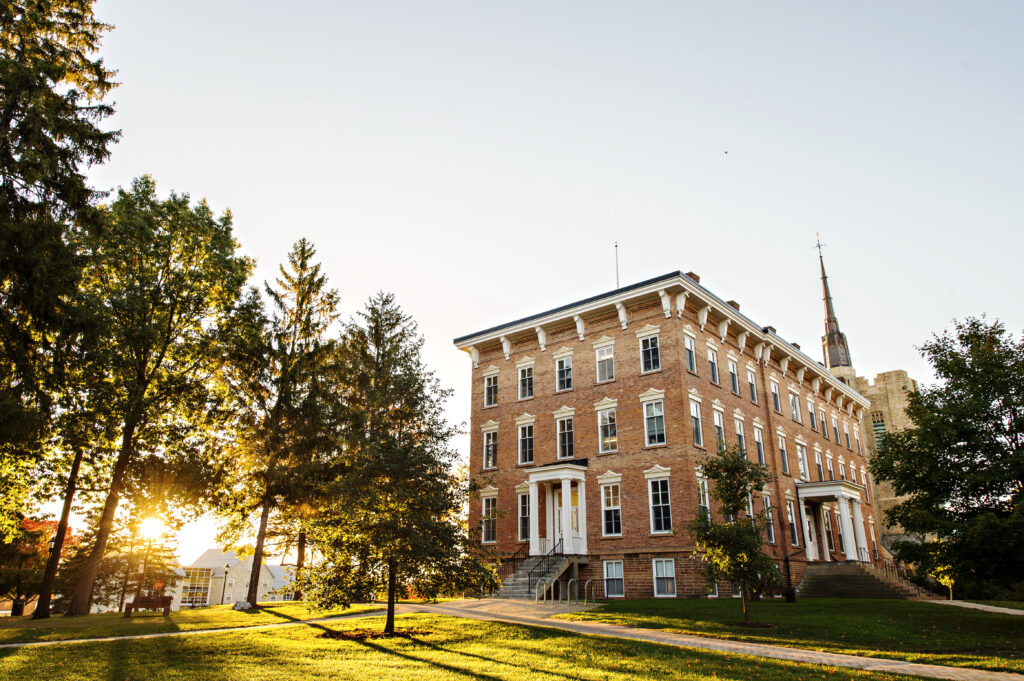
The mission of St. Lawrence University is to provide an inspiring and demanding undergraduate education in the liberal arts to students selected for their seriousness of purpose and intellectual promise.
Leadership

Kathryn A. Morris
Kathryn A. Morris became the 19th president of St. Lawrence University on July 1, 2021. In her first two years, she led the campus out of the pandemic and outlined a strategic framework to propel the university toward future success.
Morris has raised millions of dollars in support of key elements of that vision, including increased programming and personnel to enhance community well-being, as well as the new Center for the Environment, which launched in late 2023. Her Laurentian Impact initiative has fueled investment in the Center for Career Excellence to increase opportunities for students to connect with coaching, alumni mentors, research fellowships, and internships—all to help graduates find not just placements in jobs and graduate programs, but pathways in life that are personally meaningful to them, and that contribute to the greater good.
Morris is advancing the university’s facilities enhancement initiative, a $30 million investment to significantly improve campus infrastructure, focusing on renovating residence halls and academic buildings while supporting sustainability and energy conservation. By prioritizing student spaces, this project will strengthen the living-learning experience for generations of students. Morris has also been instrumental in providing vision and garnering support for the George W. Karpus ’68 Athletic Center at Appleton Arena, a donor-funded addition dedicated to Division III student-athletes.
Morris earned both her master’s and PhD in social psychology from the University of Texas at Austin and her bachelor’s degree in psychology from Gettysburg College. She has served on the board of trustees of her undergraduate alma mater since 2015.
University Organizational Chart
Intercultural Engagement, Inclusion, and Belonging
2025 – 26 University Strategic Framework
The Student Body (Fall 2025)
Total Enrollment: 1,812
Undergraduate: 1,778
Graduate: 34
Undergraduate men: 49%
Undergraduate women: 51%
U.S. underrepresented students: 13%
International students: 11%

Benefits Overview
St. Lawrence University offers its staff and faculty an extensive range of health care and life insurance benefits, retirement options, educational assistance programs, and other programs and services. The university is committed to providing a competitive benefits package to attract and retain the highest quality staff, including the following:
- Medical, dental, and vision insurance
- 403(b) retirement plan (six percent university contribution) and 403(b) supplemental retirement plan
- Group term life/AD&D insurance
- Flexible spending account
- Tuition remission and tuition exchange
- Short-term, intermediate-term, and long-term disability insurance
- New York State paid family leave
- Paid vacation (20 days)
- Paid holidays
- Employee assistance program
Learn more about St. Lawrence’s benefits program here.
Application
Review of applications will begin immediately, and continue until the position is filled. To apply for this position, please click on the Apply button, complete the brief application process, and upload your resume and position-specific cover letter.
Applicants needing reasonable accommodation to participate in the application process should contact Spelman Johnson at 413-529-2895 or email info@spelmanjohnson.com.
Visit the St. Lawrence University website at https://www.stlawu.edu/
St. Lawrence University is an equal opportunity employer.
RELATED LINKS: