

Responsibilities of the Position
The director of fraternity and sorority engagement (director) provides strategic leadership, vision, and oversight for Wake Forest University’s (WFU) fraternity and sorority community, comprising 30 chapters across four governing councils and engaging approximately 56 percent of the undergraduate student population. Reporting to the executive director of student engagement within the division of campus life, the director advances a values-based fraternity and sorority experience that promotes leadership development, organizational excellence, student wellbeing, belonging, accountability, and community engagement. The director leads a team of three professional staff and serves as a key campus partner in fostering a vibrant, engaged, and inclusive fraternity and sorority community.
A central responsibility of the role is cultivating and maintaining strong relationships with students, chapter and council leaders, advisers, alumni volunteers, parents and families, faculty, staff, and inter/national organization representatives. The director serves as the primary resource for interpreting University policies and procedures, provides guidance and support to chapter advisers and governing councils, and strengthens collaboration among stakeholders invested in the fraternity and sorority experience. The director also oversees the expansion and extension process for new organizations, working closely with campus and external partners to ensure successful integration and sustainable growth.
The director provides strategic leadership for the office of fraternity and sorority engagement (OFSE), aligning departmental priorities with the University’s Strategic Framework and the Campus Life Strategic Vision. The director oversees the Old Gold Standards, the guiding framework for fraternities and sororities, and advances initiatives that strengthen chapter effectiveness, student development, and community wellbeing. Through assessment and data-informed decision-making, the director promotes organizational learning, accountability, and continuous improvement across the fraternity and sorority community.
Additional key responsibilities include:
- Manage all OFSE funds; analyze financial expenditures, develop forecasts, and facilitate annual budget preparation to ensure fiscal responsibility.
- Create a comprehensive communications strategy for OFSE to ensure all stakeholders are engaged with the fraternity and sorority community.
- Provide leadership for risk prevention and compliance efforts for chapters and councils that foster personal and peer accountability and risk reduction, with a focus on interpersonal violence, alcohol and other drugs, and hazing prevention education.
- Provide resources and services that strengthen the role and effectiveness of fraternity and sorority advisers. Serve as liaison for advisers, University alumni, faculty, staff, and inter/national headquarters’ leadership.
- Support fraternity and sorority chapters and the Interfraternity Council, National Panhellenic Conference, National Pan-Hellenic Council, and United Greek Council.
- Collaborate with the office of student conduct, fraternity and sorority advisers, and inter/national headquarters when responding to OFSE-specific concerns and allegations.
- Ensure regular communication with students, faculty, staff, parents and families, alumni, and community partners.
- Develop and implement an assessment plan for the OFSE; collect and analyze data, identify themes, and communicate impact.
- Serve on the campus life leadership and engagement leadership teams, participate in divisional initiatives, and contribute to University committees and strategic priorities that advance the mission of Wake Forest University.
Qualifications and Characteristics of the Successful Candidate
The successful candidate will possess a master’s degree in higher education, or a related field, along with at least five years of progressively responsible experience in fraternity and sorority life, student engagement, or a related area within student affairs. Demonstrated progressive leadership experience, including the supervision, development, and mentorship of professional staff, is also required.
The ideal candidate will possess exceptional interpersonal and relationship-building skills and a demonstrated ability to work collaboratively with a wide range of constituents in a diverse university environment. Strong written and verbal communication skills are essential, as is the ability to present views in a clear and compelling manner. The successful candidate will also demonstrate excellent organizational and project management skills, with the ability to prioritize competing demands, manage multiple initiatives simultaneously, and bring projects to successful completion.
Additional qualifications include the ability to interpret and apply institutional policies and procedures, strong critical thinking and problem-solving skills, and an understanding of student development and leadership theories that inform effective student engagement practice. The successful candidate will be proficient with Microsoft Office, Google Workspace, and related technology platforms used to support communication, assessment, presentations, and program administration. Progressive experience within the fraternity and sorority engagement field and national and/or regional leadership within a professional organization are preferred.
In addition to the qualifications stated above, key stakeholders identified the following capabilities and attributes of a successful candidate:
- A strategic and collaborative leader who can create and advance a compelling vision for fraternity and sorority engagement that celebrates the contributions, strengths, and developmental outcomes associated with affiliation at Wake Forest.
- A track record that demonstrates an ability to provide strategic leadership through effective partnership-building, risk mitigation, policy creation and implementation, and the development of collaborative solutions that advance organizational effectiveness and student success.
- Experience overseeing student-facing facilities and spaces, including operational management, strategic planning, stakeholder coordination, and the equitable stewardship of resources that support student engagement and community development.
- A collaborative and student-centered leadership style characterized by accessibility, relationship-building, transparency, and a commitment to fostering an inclusive and supportive community.
- Evidence of success in building and leading high-performing teams through staff mentorship, professional development, talent cultivation, and the creation of a collaborative and inclusive work environment.
- Experience working within a campus community where fraternity and sorority life plays a significant and visible role in the student experience, and an understanding of the opportunities and complexities associated with a highly engaged fraternity and sorority culture.
- Experience partnering with fraternity and sorority governing councils and chapter advisers to develop student leaders, strengthen organizational effectiveness, promote accountability, and advance community engagement.
- Strong commitment to student development and the ability to create meaningful opportunities for leadership, belonging, wellbeing, and personal growth through the fraternity and sorority experience.

Opportunities and Challenges of the Role
The next director of fraternity and sorority engagement will have the opportunity to build upon a vibrant and highly engaged community that plays a significant role in the Wake Forest student experience. Supported by University leadership, dedicated campus partners, engaged students, and invested alumni, the director will be positioned to make a lasting impact on the fraternity and sorority community. The role offers an exceptional opportunity to advance innovative ideas, strengthen community partnerships, and move an already successful fraternity and sorority experience to its next level of excellence. Key opportunities and challenges for the position include:
- Serve as a champion for fraternity and sorority engagement by fostering greater awareness of its value and deepening its connections to the University’s educational mission and strategic priorities.
- Leverage the strong support of University leadership and campus partners to advance strategic priorities, enhance the student experience, and elevate the impact of OFSE across Wake Forest.
- Promote the positive impact of fraternity and sorority affiliation while leading efforts related to risk prevention, organizational accountability, policy compliance, and student wellbeing.
- Navigate the opportunities and complexities associated with a fraternity and sorority community that engages more than half of Wake Forest’s undergraduate population and is deeply embedded in the campus culture.
- Develop and implement a thoughtful approach to system expansion and community development that aligns with institutional priorities, student interests, and long-term organizational sustainability.
- Shape the future of the OFSE by investing in staff development, strengthening team capacity, and aligning resources and responsibilities with the evolving needs of the fraternity and sorority community.
Measures of Success
The items listed below will define the director of fraternity and sorority engagement success throughout the first year of employment:
- The director has established trusted and productive relationships with students, chapter and council leaders, advisers, faculty, staff, parents and families, alumni, and inter/national organization partners, resulting in a strong network of support for the fraternity and sorority community.
- The director is recognized across the institution as a visible and strategic advocate for OFSE, effectively communicating the value, impact, and contributions of the community through meaningful engagement and data-informed storytelling.
- The director has cultivated a high-performing, student-centered team that is responsive, collaborative, and widely regarded as a trusted resource by students, advisers, and campus partners.
- The director has fostered a culture of accountability and care by effectively navigating complex risk management, conduct, and policy-related matters while maintaining trust, consistency, and adherence to institutional expectations.
- The director has developed and implemented a strategic plan for the thoughtful growth of the fraternity and sorority community, including the exploration and successful advancement of opportunities for chapter expansion.
- The director has implemented meaningful assessment practices that demonstrate the impact of FSE and inform strategic decision-making.
- The director has advanced initiatives that enhance student wellbeing, belonging, leadership development, and organizational excellence across the fraternity and sorority community.

Overview of the Office of Fraternity and Sorority Engagement
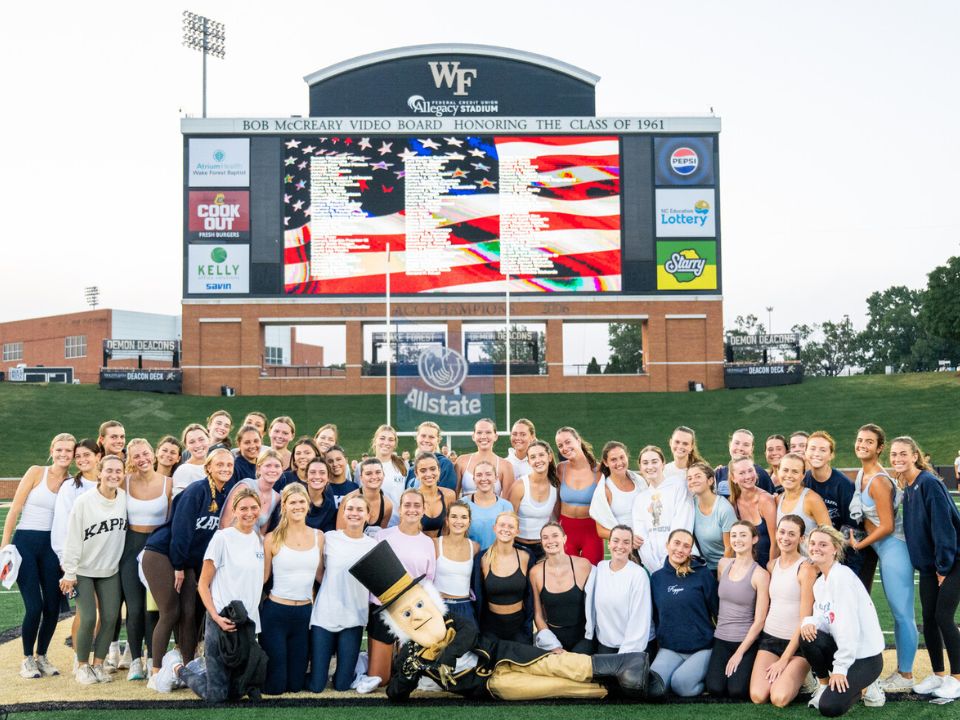
Established in 2025, the Office of Fraternity and Sorority Engagement supports a dynamic community of Greek-letter organizations at Wake Forest. The office creates spaces where values-based leadership, lifelong connections, and meaningful service can thrive, whether students are looking to get involved, grow as a leader, or make the most of their collegiate experience. Fraternity and sorority life has been part of Wake Forest since the late 1800s, when the Kappa Alpha Order was established.
Interfraternity Council (IFC)
The Interfraternity Council (IFC) is the governing body for Wake Forest University’s oldest traditional Greek-letter organizations. The council currently oversees 11 recognized chapters. IFC hosts Formal Recruitment for first-year and continuing students in the spring and for continuing students only in the fall.
National Pan-Hellenic Council (NPHC)
The National Pan-Hellenic Council at Wake Forest University serves as the governing body for the university’s historically Black Greek-letter organizations. Currently, seven active chapters are part of this council.
Membership intake within the National Pan-Hellenic Council (NPHC) at Wake Forest University is a structured process through which historically African American fraternities and sororities identify, educate, and initiate new members. Each organization determines the semester in which membership intake will occur, and some organizations may choose not to conduct intake during both the fall and spring semesters within the same academic year.
National Panhellenic Conference (NPC)
Panhellenic recruitment gives students the chance to explore joining one of Wake Forest’s eight social sororities. Recruitment occurs in two ways: formal recruitment, held each January before classes begin, and continuous open bidding (COB), which takes place year-round after formal recruitment.
United Greek Council (UGC)
Membership intake is a structured process through which organizations within the United Greek Council (UGC) identify, educate, and initiate new members who align with their organizational values and commitment to cultural awareness, leadership, and community. While many organizations may conduct membership intake each semester, some may choose not to hold an intake process during a particular semester or academic year.
Division of Campus Life
The division of campus life consists of a broad range of offices focused on supporting and developing the Wake Forest student experience. In the spirit of “Pro Humanitate”, the division cultivates a transformative campus experience through curiosity, care, and connection. In doing so, they foster an inclusive learning community where all matter, belong, and thrive.
Campus Life Organizational Chart
Divisional Leadership

Dr. Shea Kidd Brown
Shea Kidd Brown joined Wake Forest University as Vice President for Campus Life in January 2022. Kidd Brown earned a bachelor of arts degree in speech communication from the University of Southern Mississippi, a master’s of education in college student affairs administration from the University of Georgia, and a Ph.D. in educational psychology and research from the University of Memphis, where her scholarship focused on racial identity development in African American college students. She previously served as Associate Vice Chancellor for Student Life and Dean of Students at the University of Tennessee, Knoxville. Kidd Brown, whose work is well-versed in her commitment to student care, belonging, and success, can often be found serving alongside our students in what she defines as “hard work and heart work.” In addition to her everyday work as Vice President, you can keep up with all things Dr. Shea via her Instagram, as well as her podcast, Kidd You Not, where she invites Deacs around campus to engage in conversations around our connected humanity.

Dr. Marianne Magjuka
Marianne Magjuka serves as Assistant Vice President for Engagement in the Division of Campus Life. She leads the Engagement area, which includes the Office of Civic & Community Engagement, Office of Fraternity and Sorority Engagement, Intercultural Center, Office of Leadership Engagement, LGBTQ+ Center, Office of Student Engagement (including Benson University Center), and Women’s Center. Since 2011, Magjuka has served in various roles, including Assistant Dean of Students, Director of Campus Life, and founding Executive Director of the Office of Civic & Community Engagement, at Wake Forest. She is a senior leader in the Division of Campus Life focused on creating an environment where all students find involvement, community, and belonging. Dr. Magjuka holds a B.A. and M.Ed. from the University of Notre Dame and an Ed.D. in Higher Education Management from the University of Pennsylvania.

Dana Pursley
As the executive director of student engagement, Pursley provides strategic leadership for student involvement, campus traditions, fraternity and sorority life, and student-centered programming at Wake Forest University. She works collaboratively across campus life to foster a vibrant, inclusive, and engaging student experience that supports leadership development, belonging, and community connection. Pursley holds a B.S. from Heidelberg University and a M.A. in Higher Education and Student Affairs from The Ohio State University.
Institutional Overview
Founded in 1834, Wake Forest University is a private university in Winston-Salem, North Carolina, enrolling over 8,000 students. WFU is a vibrant community where students pursue learning in one or more of over 50 majors, 60 minors, and additional programs in six colleges and schools. Wake Forest University is a community that seeks the enlightenment and freedom which come through diligent study and learning. Its higher goal, however, is to give life to the University motto “Pro Humanitate,” as members translate a passion for knowledge into compassionate service. Students at Wake Forest University enjoy a great deal of access to and interaction with world-class faculty both in and out of the classroom, with a student-faculty ratio of 11:1. Wake Forest employs approximately 2,772 full- and part-time faculty and staff.
Winston-Salem residents enjoy close proximity to the beautiful Blue Ridge Mountains (1.5 hours) and Atlantic beaches (4 hours), a moderate climate with four distinct seasons, a very reasonable cost of living, and an eclectic variety of restaurants, wine bars, and breweries for dining with friends and family. Winston-Salem offers many of the amenities of a large city, but with the sense of community and quality of life of a smaller town. Known as “City of Art and Innovation,” Winston-Salem has experienced significant growth in the downtown Innovation Quarter, which is home to the Wake Downtown campus. Winston-Salem is home to four other institutions of higher education, including Winston-Salem State University, Salem College, UNC School of the Arts, and Forsyth Technical Community College.

The Student Body
Total Enrollment: 9,633
Undergraduate: 5,595
Graduate: 4,038
Male: 44%
Female: 56%
African American/Black: 8%
Asian: 6%
Hispanic/Latino: 10%
White: 63%
Two or More Races: 4%
Unknown: 3%
Non-Resident: 6%
Institutional Leadership

Peter Rodriguez
The Board of Trustees of Wake Forest University recently announced the appointment of Peter Rodriguez as the University’s 15th President. A distinguished economist and transformative academic leader, Rodriguez currently serves as the dean of Rice University’s School of Business, which includes the Jesse H. Jones Graduate School of Business and the Virani Undergraduate School of Business. He will begin his presidency at Wake Forest on July 1, 2026.
Rodriguez spent a decade transforming Rice Business, where he doubled MBA enrollment, added the Virani Undergraduate School of Business, and launched Rice’s first online graduate degree. Before Rice, he was a professor and Chief Diversity Officer at the University of Virginia’s Darden School of Business.
University Mission and Purpose
Benefits Overview
In 2026, Forbes ranked Wake Forest University one of America’s best large employers. To learn more about the benefits offered by Wake Forest University, click here.
Application
Review of applications will begin July 8, 2026, and continue until the position is filled. To apply for this position, please click on the Apply button, complete the brief application process, and upload your resume and position-specific cover letter. Applicants needing reasonable accommodation to participate in the application process should contact Spelman Johnson at 413-529-2895 or email info@spelmanjohnson.com.
Visit the Wake Forest University website at https://www.wfu.edu/
The University is an equal opportunity employer and welcomes all qualified candidates to apply without regard to race, color, religion, national origin, sex, age, sexual orientation, gender identity and expression, genetic information, disability, and military or veteran status.
RELATED LINKS: