
Responsibilities of the Position
Summary
The executive director of the College Association of Delhi, Inc. (CADI) plays a pivotal role in shaping the student experience at the State University of New York at Delhi (SUNY Delhi). Leading the auxiliary services that touch nearly every aspect of campus life, this role brings together strategy, relationships, and day-to-day operations, and serves as the primary point of connection between SUNY Delhi, its auxiliary partners, and its external vendors. SUNY Delhi is entering a period of growth and innovation, highlighted by a new dining partnership with Sodexo, the introduction of an unlimited meal plan, and the opening of a new residential dining facility. These exciting initiatives make this an ideal time to join the CADI/SUNY Delhi leadership team and lead meaningful change.
In direct support of the goals and mission of SUNY Delhi, the executive director provides leadership for a broad portfolio of services that includes Sodexo dining operations (resident, retail, and catering), Barnes & Noble Campus Bookstore and Cafe, Delhi Dollars spending accounts, vending, residence hall laundry equipment, ID/dining cards, property management, and the Bluestone Restaurant at the SUNY Delhi Golf Course. Combining a hands-on approach with a creative and innovative mindset, the executive director partners with the Division of Student Life, college leadership, and the CADI Board of Directors to consistently enhance the student experience and promote excellent customer service.
The executive director reports to the president of the CADI Board of Directors and SUNY Delhi’s vice president for student life and maintains a close, collaborative relationship with the college’s senior leadership. As a CADI employee, the executive director leads a team of ten professional staff (including three direct reports), indirectly supports approximately 100 student staff, and oversees a $12 million operating budget.
Key Specific Responsibilities
Financial Management & Oversight
- Work collaboratively with the CADI Finance Committee, treasurer, controller, and independent auditor to ensure CADI’s financial stability, providing a consistent revenue stream for program funding, operational costs, and capital reserves.
- Develop, manage, and provide comprehensive oversight of all operating budgets.
- Prepare the annual budget for approval by the CADI Finance Committee and the Board of Directors in collaboration with the director of auxiliary finances.
- Review and approve all major expenditures and partner with the director of auxiliary finances to effectively manage all financial transactions.
- Review the annual audit and develop year-over-year comparisons.
- Coordinate with the SUNY Delhi Facilities Office and Finance & Administration Team on any CADI capital projects.
Vendor & Contract Management
- Serve as the primary point of contact and manage contractual relationships with all auxiliary service providers, meeting regularly with each functional area director.
- Prepare requests for proposals (RFP’s) and act as lead negotiator for new contracts.
- Oversee and review performance of contracted operations and negotiate renewal options.
- Engage with retained attorneys regarding vendor relationships, contract review, and modifications to terms and scope of services.
Board & Organizational Leadership
- Coordinate CADI Board of Directors meetings in collaboration with board officers, including preparing agendas, providing supporting documentation for regular and special meetings, and maintaining meeting minutes.
- Serve as a non-voting member on the CADI Board of Directors committees and support the development and revision of board policies and documents.
- Lead strategic planning, goal-setting, and project management for auxiliary programs and services.
- Recommend and implement approved policies and procedures to establish adequate control over programs and assets, ensuring compliance and promoting efficient, customer-service-oriented operations.
Human Resources & Employee Relations
- Serve as the point of contact for CADI employee human resources issues, including, but not limited to, health benefits and life insurance questions.
- Conduct personnel matters in accordance with federal, state, and local EEO laws, regulations, and agreements.
- Maintain the CADI Employee Handbook and collaborate with the CADI Personnel Committee on updates and revisions.
Campus Partnerships & Compliance
- Liaise with academic and administrative departments to foster and promote efficient and effective auxiliary services.
- Maintain open communication and collaborate with the Division of Student Life in support of auxiliary programs and services.
- Ensure auxiliary programs and services comply with relevant institution, Board of Trustees, SUNY, state, and federal regulations, laws, and educational policies.
- Serve on university committees as requested.
Emergency Operations
- Serve as the primary contact for all auxiliary service functions in the instance of a declared emergency, ensuring coordination with CADI contractual partners.
- Respond to situations as a key operational leader, particularly during emergencies or inclement weather, to ensure the uninterrupted operation of essential auxiliary services, such as student dining.
- Maintain physical availability for emergency response, including evenings, weekends, and weather-related events.
Qualifications and Characteristics of the Successful Candidate
Required Qualifications
The successful candidate will possess a bachelor’s degree in business administration or a related field from an accredited college or university; a minimum of five years of progressively responsible experience in auxiliary management, small business, and/or retail professions; and administrative experience in a higher education setting. Demonstrated knowledge and experience in one or more of the following auxiliary management units are required: food services, bookstore operations, laundry, vending, retail operations, ID/dining cards, and/or property management.
Additional required knowledge and skills include experience in writing and facilitating Requests for Proposals (RFP’s); a proven track record of successful partnership management and contract negotiations; thorough expertise in developing and managing operating budgets; a working knowledge of applicable federal, state, and local laws and regulations; excellent computer/technology skills; and an understanding of business-related software and systems.
Preferred Qualifications
Preferred qualifications include a master’s of business administration degree (MBA) or advanced degree or certification in related fields; experience or knowledge managing a not-for-profit organization, including board governance; leadership experience in a higher education setting; experience working in the SUNY system; knowledge of current trends and developments in auxiliary services; and experience with design and construction management of new and refreshed facilities.
In addition to the qualifications stated above, key stakeholders identified the following capabilities and attributes of a successful candidate:
- A proven track record as a creative visionary and critical thinker, with leadership abilities that include sound judgment, integrity, diplomacy/political savvy, professionalism, resourcefulness, transparency, dependability, and trustworthiness.
- Emotional intelligence and maturity, flexibility, adaptability, resilience, relatability, approachability, and the ability to pivot quickly and nimbly when necessary.
- Demonstrated ability to utilize data-driven decision-making to implement innovative and sustainable solutions in service delivery, never settling for the status quo.
- Experience working in complex organizational models and an understanding of organizational development within these environments.
- Strong written and oral communication skills, with the ability to prepare and present information effectively, as well as the ability to relate well and communicate effectively with stakeholders at all levels, including campus leadership, colleagues, direct reports, faculty and staff, students, visitors, and the general public from diverse backgrounds.
- Energy and enthusiasm for the role, passion for the work, a consistently positive attitude, strong collaborative and motivational skills, the ability to connect effectively with students, and a willingness to do whatever it takes to successfully enhance the student and customer experience.
Opportunities and Challenges of the Role
As the executive director joins the CADI community at SUNY Delhi, they will likely encounter the following opportunities, priorities, and challenges, as shared by key campus stakeholders:
- The outlook for CADI is fresh and fast-paced, with exciting opportunities awaiting the new executive director. Within the past year, CADI at SUNY Delhi has transitioned from a self-operated dining program to a third-party contract managed by Sodexo. Additionally, the overall student dining plan will evolve in Fall 2026 to an unlimited dining model, and a retail dining facility will be converted into a second residential dining operation. To be fully engaged in the process and quickly integrated into the operations of CADI and the SUNY Delhi student experience, the executive director should bring energy, positivity, passion, and a willingness to “roll up their sleeves,” engage at every level, and work side-by-side with their staff and the student leadership from day one.
- The campus culture at SUNY Delhi is visibly open and welcoming, one that centers on building strong, healthy, and mutually supportive relationships, and CADI is committed to this as a foundation in all facets of its operation. Robust collaboration and partnership-building are essential in this role. Upon arrival, the executive director should be prepared to invest deeply in the staff, the units in their portfolio, colleagues, other campus departments, and vendor partners to foster open communication, support increased transparency, and generate opportunities for feedback and stakeholder (student and staff) connections. The executive director should work diligently to develop and promote these partnerships, become the trusted “face” of the CADI, and quickly build rapport with internal staff, the board, peers on campus, other partners and colleagues, and external retail vendors.
- The CADI staff are extraordinarily proud of the services they provide to the campus and the venues under their purview, and work diligently to foster a distinctly student-focused environment within the department. With this in mind, the ability to grow, develop, and mentor a dynamic, diverse professional staff while building a cohesive, dedicated team is an exciting element of the role. To succeed in this area, the executive director must be a strong motivator and possess high-level supervisory, organizational, and staff development skills. An ability to empower staff to meet and exceed job performance expectations is important. Staff support is critical; transparent, open communication at all levels is essential; and professional development and training opportunities for staff should be diligently explored. Navigating the current team’s needs, meeting with each unit individually, getting to know the people who comprise each unit, and spending quality time in each area (i.e., “manage by walking around”) will help create strong bonds for the long term.
- The executive director must possess excellent fiscal management skills and the ability to effectively administer large and complex budgets and financial statements. The executive director must prioritize a deep-dive analysis of the current business plan and budget forecast, and work collaboratively with the Board of Directors and SUNY Delhi’s financial administration to develop solid financial goals for the future. It will be imperative that financials and projections accommodate growth and expansion across all areas of the department and the campus, and that the executive director utilize innovation and creativity in their financial planning to seek additional and alternative sources of revenue over time.
- Overall, the CADI staff and SUNY Delhi stakeholders indicated how much they enjoy working at the institution, how committed they are to the success of the student body, and how much they respect and support the teams on which they serve. The executive director will find an incredibly supportive work environment and a welcoming, close-knit community in which to live. Delhi, New York, offers small-town charm set against the beauty of the Catskills, with easy access to outdoor recreation, including hiking and trail walking, kayaking and canoeing, fly fishing, camping, skiing, and snowboarding. With a relaxed pace of life, a reasonable cost of living, and proximity to Albany and the Hudson Valley, Delhi holds broad appeal.
Measures of Success
The following expectations will define the executive director’s success throughout their first year on the job:
- CADI staff members are working together as a cohesive team; morale and staff retention are high; trust and respect are established in the department; the executive director is consistently available and willing to listen to staff; and the department’s environment is upbeat and energized.
- The executive director is visible across campus, is involved in student events and student organizations, partners with faculty and vendors to provide student engagement opportunities, and is present and available for input from students, staff, faculty, the board, and other stakeholders.
- Student satisfaction with the department’s services is consistently high; negative feedback is minimal; students are pleased with their food options and availability; and the department consistently strives for excellence in all aspects of its operations.
- Solid new relationships, partnerships, and trust have been established across a wide array of campus stakeholders; ongoing campus relationships are maintained and strengthened; and the executive director is viewed as the “face” of CADI at SUNY Delhi, an integral member of the campus community and as a flexible and adaptive partner who can quickly pivot, change directions, and address issues quickly when necessary.
- The executive director is renowned for clear, frequent, and transparent communication internally and externally.
- The executive director understands the financial operations of the various locations and services in their portfolio. Fiscal analysis and the development of long-term financial plans are underway, and new and innovative revenue sources are being considered.
Overview of CADI
The College Association at Delhi, Inc., at SUNY Delhi, is a financially self-supporting, not-for-profit corporation contracted with the State of New York to provide a variety of auxiliary services and financial assistance for the benefit of the institution. CADI supports the success of SUNY Delhi and each student through its various endeavors and programs (see below). CADI and its employees aspire to model practices that reflect the organizational values of superb customer service, teamwork, sustainability, honesty, integrity, employee development, and service to the campus and local community.
The College Association at Delhi, Inc., was established in 1956 as a 501(c) (3) organization and is governed by the Board of Directors, which is comprised of elected and appointed individuals, including faculty, staff, students, administration, alumni, and community members. CADI provides a wide array of auxiliary services for the SUNY Delhi campus community, including dining, bookstore, laundry services, ID cards, payroll, and vending. The organization owns real estate and operates a restaurant at the college golf course. Specifically, CADI contracts with Sodexo to manage its dining program and with Barnes and Noble to administer the campus bookstore. Each year, CADI invests more than $300,000 in student scholarships, academic programs, and essential services. That support also helps make campus life vibrant and welcoming—from orientation and Community Service Day to homecoming, commencement, and major student weekends—while strengthening priorities like the Educational Opportunity Program (EOP), the Collective Pursuit for Academic & Social Supports (CPASS), community service initiatives, staff development, and campus beautification. CADI also provides financial support to several campus non-profit partners in the community on behalf of the college, including O’Connor Hospital and the Delhi Fire Department.
Elected annually by the Board of Directors, the board president serves as the corporation’s chief executive and administrative officer. In this role, the president provides leadership and oversight of the corporation, presides at board meetings, and works closely with the executive director to provide guidance and supervision. The vice president for student life also maintains a dotted-line supervisory relationship with the executive director, supporting strong alignment with the campus community.
Institutional Overview
SUNY Delhi offers associate’s, bachelor’s, and master’s degrees, as well as certificates and non-credit or non-matriculated courses and programs in a wide variety of disciplines. As one of the technology colleges within the public State University of New York system, SUNY Delhi focuses on integrating technology and hands-on, career-focused practices into more than 60 majors and programs. All aspects of life at SUNY Delhi prepare students for their future careers, from learning and training through academic coursework to gaining soft skills through co-curricular activities. SUNY Delhi’s diverse student body participates in:
- Over 50 clubs and organizations.
- 19 NCAA Division III athletic teams.
- Impressive local community service opportunities.
Mission, Vision, and Strategic Plan
Location
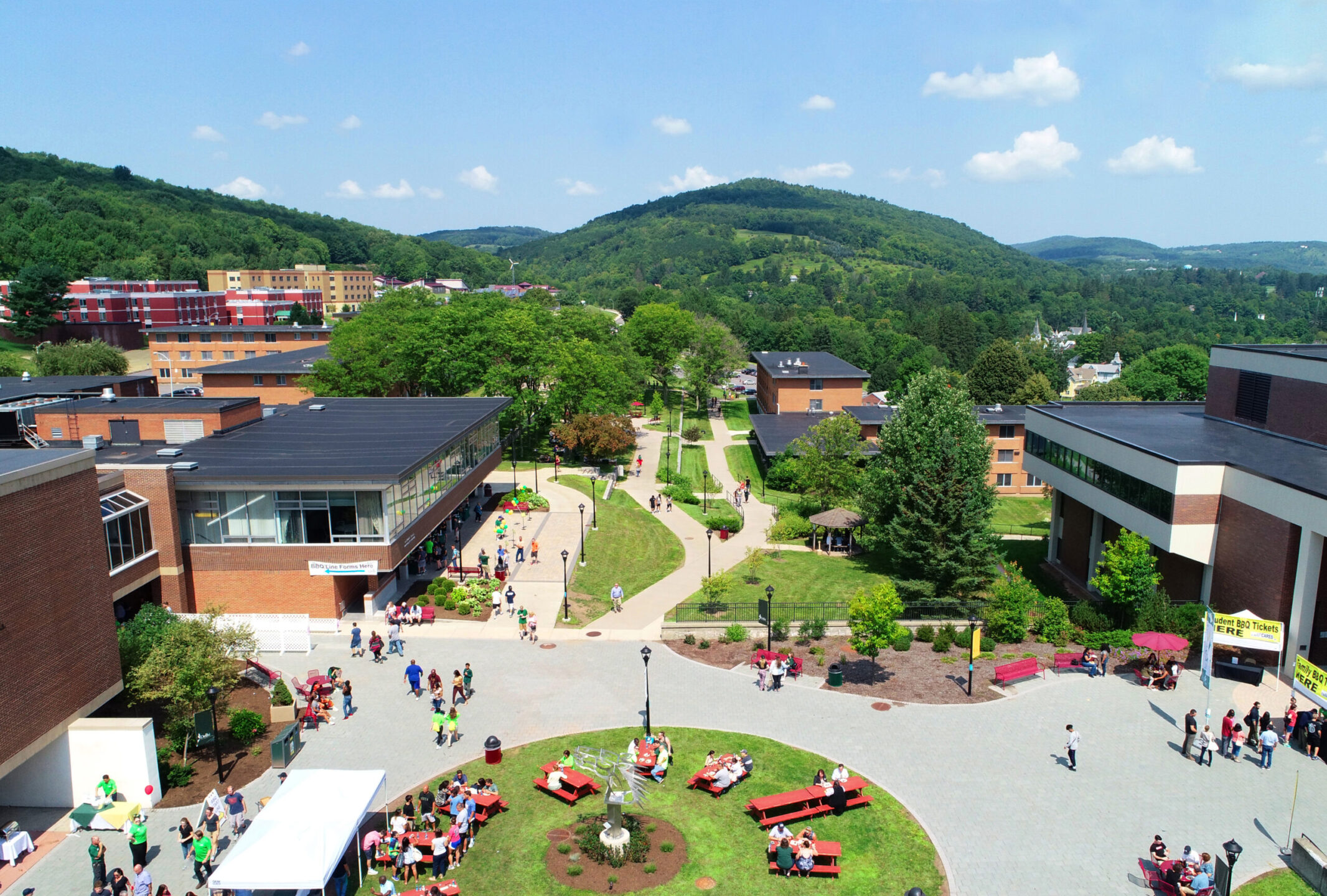
Located in the scenic Catskill Mountains of central New York, SUNY Delhi is only three hours north of New York City and just over an hour from the state capital, Albany. SUNY Delhi students represent communities across New York State, the U.S., and around the world.
The village of Delhi, New York, is charming and vibrant, offering amazing opportunities to explore the great outdoors while still having easy access to larger cities and major metropolitan areas. SUNY Delhi students learn, live, and work in this close-knit, inclusive community.

The Student Body (Fall 2025)
Total Enrollment: 3,156
Female: 55%
Male: 45%
Asian/Pacific Islander: 1%
Black/Non-Hispanic: 17%
Hispanic: 18%
American Indian/Native Alaskan: <1%
Native Hawaiian and Other Pacific Islander: <1%
Non-US Resident: <1%
Other and Unknown: 4%
Two or more races, non-Hispanic: 4%
White: 55%
Institutional Leadership

Mary Bonderoff
Mary Bonderoff serves as the eleventh president at SUNY Delhi, leading the institution since May 2022. Previously, Bonderoff was a special advisor to the chancellor at SUNY Delhi, while continuing to fulfill her responsibilities as vice president for student affairs and chief diversity officer at SUNY Morrisville.
Bonderoff began her career at SUNY in 1989 at the Oneonta campus, serving in roles with increasing responsibility, including director of the Center for Multicultural Experiences, director of student diversity, and director of diversity education and community outreach. She went on to serve at SUNY Morrisville before becoming the president at SUNY Delhi.

Shai Butler
Shai Butler joined SUNY Delhi as the vice president of student life in June 2025. CADI is one of nine units that directly report to Butler (see the organizational chart below). A prominent author, speaker, and higher education executive with C-level experience in both the public and private sectors, Butler has contributed to the global online industry publication, higheredjobs.com, and has authored Better. Not Perfect, an inspirational memoir published in 2023.
During her dynamic and impactful career, Butler earned a doctorate in law and policy and has spent over 25 years as an organizational leader in higher education, serving in roles including vice president for advancement & external affairs, vice president of student development, and chief diversity officer. She is the former state-wide chair of the New York State American Council on Education Women’s Network. She has held two political appointments, including one by the New York State Health Commission to the Prevention & Planning Group for HIV/AIDS and another by the Schenectady County Human Rights Commission.
Student Life Organizational Chart

Application
Review of applications will begin immediately, and continue until the position is filled. To apply for this position, please click the blue “Apply for Position” button, complete the brief application process, and upload your resume and position-specific cover letter. Applicants needing reasonable accommodation to participate in the application process should contact Spelman Johnson at 413-529-2895 or email info@spelmanjohnson.com.
Visit the CADI website at https://www.delhi.edu/cadi/ and the full SUNY Delhi website at https://www.delhi.edu/.
SUNY Delhi is an affirmative action and equal opportunity employer with a strong commitment to enhancing the diversity and inclusion of the campus community and curriculum. The institution is committed to promoting an environment of equity, inclusion, and respect for others. SUNY Delhi is committed to the diversity of its community. Women, minorities, veterans, individuals with disabilities, and members of underrepresented groups are encouraged to apply.
RELATED LINKS: