

Responsibilities of the Position
Reporting to the executive vice president for facilities and operations, the vice president of public safety (VPPS) oversees a department reflective of the values of an inclusive educational and working environment on campus, while building relationships and collaborating with students, faculty, and staff in support of a positive experience for the entire Columbia University community.
The VPPS is expected to provide a comprehensive vision, strategic leadership, and effective management for the Department of Public Safety across several campuses and works closely with other University affiliates at Barnard College, Teachers College, and other neighborhood institutions. The VPPS will be responsible for developing and implementing current and emerging best practices in public safety and campus security, prioritizing prevention and community initiatives to ensure organizational transparency, impartiality, fairness, respect, and dignity. The VPPS will serve as the University’s primary liaison to external law enforcement and public safety partners, including, as appropriate, federal agencies, local and regional authorities, neighborhood security associations, and other key stakeholders. In this capacity, the VPPS will foster collaborative relationships and coordinate on matters related to public safety, emergency preparedness, and incident response.
This position will also oversee and lead programs and services, including but not limited to the oversight of educational awareness and crime prevention programs for students, faculty, and staff and the development and implementation of best practices, policies, and procedures for institutional emergency response and preparedness. The VPPS will drive the process to ensure that University systems and technology adequately protect both community and physical property by leveraging existing technological capabilities, upgrading existing systems as needed, and staying abreast of new and emerging technologies to support the University’s growth and changing needs.
The VPPS must demonstrate a commitment to continuous evaluation and assessment of organizational effectiveness by reviewing existing metrics and instituting new measures to evaluate the level of efficiency and quality of service delivery for the Department. Furthermore, the VPPS will be accountable for following up on evaluations that identify areas for improvement and alignment in a consistent and timely manner.
The VPPS is responsible for building bridges of communication, both internally throughout the organization and across the campuses, to facilitate a greater sense of community. The VPPS will ensure cooperation on projects that facilitate group learning and cohesiveness across the distinct units in the Department. The VPPS manages approximately 302 full-time staff across three distinct functional areas—Operations, Administrative Services (Training and Development), and Technology Projects—and oversees an annual operating budget of $76 million. This position is also responsible for overseeing the effective deployment of approximately 300 contract guards. The Department staffing includes a recently established cadre of approximately 36 sworn Special Patrol Officers, appointed through the New York Police Department (NYPD), who enhance the safety ecosystem and have enhanced training and enforcement capabilities. The VPPS is responsible for achieving organizational effectiveness by building staff depth and technical capacity at all levels within the organization, and by ensuring the ongoing orientation, in-service training, and evaluation programs to strengthen personnel at all levels, especially at the front-line, public-facing safety officer level.
Qualifications and Characteristics of the Successful Candidate
A bachelor’s degree and at least ten years of progressive experience in the field of public safety, law enforcement, or community engagement are required. An advanced degree, experience in a higher education setting, and at least five years of senior management experience are preferred. The successful candidate will possess significant knowledge public safety and emergency response practices, excellent strategic and operational abilities, outstanding communication and interpersonal skills, and a clear and demonstrated commitment to community caretaking as a core professional value.
The ideal candidate will appreciate the complexity of public safety on a dynamic residential university campus with a significant international population in a major metropolitan area. In addition, candidates will demonstrate an unwavering commitment to advancing equity and inclusion in every facet of the Department’s diverse activities; skill in conflict resolution and creative problem solving; experience working with a unionized work force and a record of success establishing and maintaining positive labor/management relations; proven ability to motivate the department’s workforce to succeed as a high-functioning team; and the capacity to inspire trust and confidence.

Opportunities and Challenges of the Role
At a pivotal moment for campus public safety nationwide, Columbia University has a significant opportunity to redefine the role of public safety within a complex, global, and highly engaged academic community. Heightened national scrutiny of law enforcement practices, coupled with recent campus experiences, has created both challenges and momentum for meaningful progress. The next VPPS will be positioned to build trust, strengthen relationships, and shape a modern, community-centered approach to safety and security.
Columbia’s broad community brings a wide range of perspectives, and some students and faculty—particularly those from historically marginalized communities—may approach public safety with caution. The VPPS must engage these perspectives with authenticity, transparency, and consistency, fostering confidence through visible leadership and inclusive practices. Success will require a willingness to navigate complex and crucial conversations, actively listen, and collaborate across constituencies to develop solutions grounded in mutual understanding.
This role demands a leader who is both strategic and operational, capable of guiding long-term vision while maintaining a strong and visible presence across campus. The VPPS must be a trusted and steady leader who can skillfully balance competing priorities—between safety and openness, authority and empathy, and external trust and internal advocacy—while continuing to move the Department forward.
The Department of Public Safety must be experienced as accessible, engaged, and community-centered. The VPPS will be expected to build meaningful partnerships with students, faculty, and administrators; communicate clearly and consistently; and actively involve the campus in safety initiatives. By leveraging national best practices, emerging trends, and professional networks, the VPPS will continue to advance a community caretaking philosophy that reflects the University’s values.
Columbia’s campuses—Morningside, Manhattanville, and the Columbia University Irving Medical Center (CUIMC)—present distinct environments and safety considerations. The VPPS must lead with a collaborative and integrated approach, ensuring alignment across campuses while remaining responsive to local context and community needs. In parallel, the VPPS will maintain and strengthen relationships with federal, state, and local law enforcement partners, ensuring effective coordination while upholding institutional priorities.
This is a role defined by complexity, visibility, and impact. For the right leader, it offers a meaningful opportunity to guide a dedicated team, strengthen trust, and shape the future of public safety at one of the world’s leading universities.
Additional opportunities, priorities, and challenges that the vice president will face include the following:
- Grounded in Columbia’s commitment to community and human relations, the VPPS will lead efforts to strengthen trust and credibility with the campus community. This includes advancing a public safety approach that is transparent, inclusive, and responsive, with a sustained focus on building confidence and fostering meaningful engagement across diverse constituencies.
- The VPPS will bring innovative and strategic approaches to the recruitment, development, and retention of Public Safety personnel. This includes cultivating a high-performing, service-oriented team through mentoring, professional development, and articulating clear pathways for advancement, while reinforcing a culture of accountability, support, and shared purpose.
- Columbia Public Safety relies on a strong and collaborative relationship with the New York City Police Department. The VPPS must prioritize the development and ongoing stewardship of this partnership, recognizing that crime and public safety across New York City directly impact the campus community. In addition, the VPPS will work closely with federal, state, and local law enforcement agencies, fostering effective collaboration, clear communication, and well-defined mutual aid agreements.
- Modern safety and security operations depend on advanced technology and integrated infrastructure. The VPPS should demonstrate comfort with and leadership in safety, security, and communications systems, including oversight of dispatch operations and the continued development of a modern command center.
- The VPPS will leverage data and assessment tools to drive continuous improvement, enhance organizational effectiveness, and optimize resource allocation. This includes streamlining processes and strengthening collaboration with campus partners to deliver efficient, coordinated, and high-quality public safety services.
Measures of Success
At an appropriate interval after joining Columbia University, the items listed below will initially define success for the new vice president of public safety.
- Communication from the Department is frequent, a culture of transparency is being developed, and the “story” of public safety at Columbia is being shared with all campus constituents.
- Physical and psychological safety, community standards, outreach to the campus, and shared responsibility are foundational concepts throughout the department, ensuring that all members of the community feel safe, respected, and able to participate fully.
- The new VPPS has established measurable progress in building trust and credibility across the University community, while achieving key operational milestones such as advancing the Commission on Accreditation for Law Enforcement Agencies (CALEA) accreditation, ensuring full compliance with the Clery Act, and strengthening the overall effectiveness, transparency, and accountability of the public safety function.
- Strong collaborative relationships have been established between the Department of Public Safety and the campus community, especially with the academic and administrative departments, faculty, students, senior leadership, local partners in the community, and the New York City Police Department.
- The vice president is recognized as the “face” of public safety by the campus community, particularly by students, and is present, involved, and visible on campus while being viewed as fair, trustworthy, transparent, accountable, and open-minded when issues arise.
- The public safety staff is working together cohesively as a team; morale is high and rising; and staff vacancies are being filled as quickly as possible.
- The vice president is consistently available and willing to listen to staff, a recruitment and retention plan has been devised, and professional development opportunities are plentiful.

Overview of the Department of Public Safety
Columbia Public Safety’s highest priority is to ensure that the services provided protect the safety of all within Columbia’s diverse community, are inclusive, and help all members develop tools to navigate the community safely and easily.
Efforts to keep the community safe include high-visibility patrols, responding to and investigating on- and off-campus incidents, providing guard services at a myriad of University events, and increasing student and employee vigilance through crime prevention seminars, workshops, and other activities.
Public Safety Mission
“The Mission of the Columbia University Department of Public Safety is to enhance the quality of life for the Columbia community by maintaining a secure and open environment where the safety of all is balanced with the rights of the individual. The Department strives to accomplish its mission while adhering to its core values of Pride, Professionalism, and Service.
The success of this mission depends upon an effective working relationship between Public Safety personnel and the diverse elements of the Columbia community, including students, staff, faculty, and visitors. Critical to this relationship is mutual respect. Therefore, we pledge to respect the needs and interests of the community we serve and to be diligent and relentless in the protection of both persons and property.
In return, we ask that our partners in the community assume their individual and collective responsibilities, and partner with Public Safety, to make Columbia University a place that is free of crime, fear, and disorder, and to provide a civil and open environment that fosters learning.”
- Blue Light Emergency Call Boxes
- Building Access
- Card Reader Repair
- Columbia University EMS
- Device Engraving – Operation ID
- Emergency Notifications
- Fingerprinting
- Guard Booth Locations
- Guard Service
- ID Card Access
- ID Center
- Lion Safe App
- Lost and Found
- Maps & Schedules
- On-Demand Evening Shuttle
- Safety Escort Program
- Situational Awareness Training
- Transportation Services
Columbia Public Safety Website
Division of Facilities and Operations
As Columbia’s largest administrative unit, facilities and operations provide a continuum of service across all aspects of life at the University for every member of the Columbia community, 24 hours a day, seven days a week, and 365 days a year.
Divisional Leadership

David M. Greenberg
David Greenberg is the executive vice president for university facilities and operations, where he leads a team responsible for new building design and construction, campus public safety, campus services for students, building and grounds maintenance for academic and administrative departments, oversight of Manhattanville construction, and the University’s residential portfolio. With over 2,000 employees, facilities and operations manages approximately 300 buildings and 15.8 million gross square feet and has an operating and capital budget in excess of $850 million per year.
Executive and Senior Staff Organizational Chart
Institutional Overview
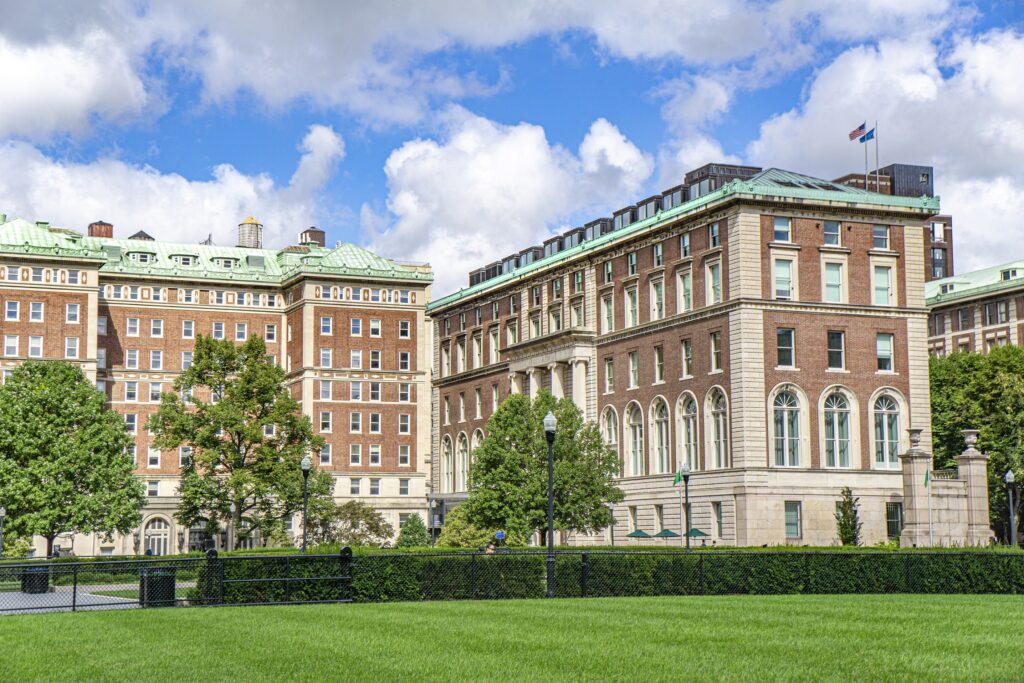
Columbia University is one of the world’s most important centers of research and at the same time a distinctive and distinguished learning environment for undergraduates and graduate students in many scholarly and professional fields. The University recognizes the importance of its location in New York City and seeks to link its research and teaching to the vast resources of a great metropolis. It seeks to attract a diverse and international faculty, staff, and student body, to support research and teaching on global issues, and to create academic relationships with many countries and regions. It expects all areas of the University to advance knowledge and learning at the highest level and to convey the products of its efforts to the world.
The Student Body
Total Enrollment: 35,769
Undergraduate: 9,751
Graduate: 22,978
Male: 45%
Female: 55%
African American/Black: 5%
Asian: 13%
Hispanic/Latino: 8%
White: 23%
Two or More Races: 3%
Unknown: 8%
Non-Resident: 39%
Institutional Leadership

Claire Shipman
Claire Shipman, CC ‘86, SIPA ‘94, was appointed Acting President of Columbia University in March 2025. A longtime leader within the Columbia community, Shipman has served on Columbia’s Board of Trustees since 2013 and was elected Co-Chair in 2023. She is an award-winning journalist and an author and a leading voice for the advancement of women’s leadership.
Shipman built an award-winning journalism career with CNN, NBC, and ABC, where she covered major global events, including the collapse of the Soviet Union. She received a DuPont and an Emmy Award for her coverage of the 1989 Tiananmen Square student uprising, a second DuPont Award for reporting on the 1995 Oklahoma City bombing, and a Peabody Award as part of CNN’s team covering the failed 1993 Soviet coup.
University Leadership | Office of the President
Upcoming President – Columbia Board of Trustees Announces Jennifer L. Mnookin as the University’s Next President | Office of the Secretary

Benefits Overview
Columbia University offers a full range of benefits to help employees and their eligible dependents stay healthy, build long-term financial security for retirement, and meet educational goals. Explore the Health and Welfare, Tax Savings, Tuition, Well-Being, and Voluntary Benefits options available.
Application
Review of applications will begin June 4, 2026, and continue until the position is filled. To apply for this position, please click on the Apply button, complete the brief application process, and upload your resume and position-specific cover letter. Applicants needing reasonable accommodation to participate in the application process should contact Spelman Johnson at 413-529-2895 or email info@spelmanjohnson.com.
Visit the Columbia University website at https://www.columbia.edu/
Columbia University prohibits any form of discrimination against any person on the basis of race, color, religion, sex, gender, pregnancy, age, national origin, disability, sexual orientation, marital status, status as a victim of domestic violence, citizenship or immigration status, creed, genetic predisposition or carrier status, unemployment status, partnership status, military status, or any other applicable legally protected status in the administration of its educational policies, admissions policies, employment, scholarship and loan programs, and athletic and other University-administered programs and functions.
RELATED LINKS: